
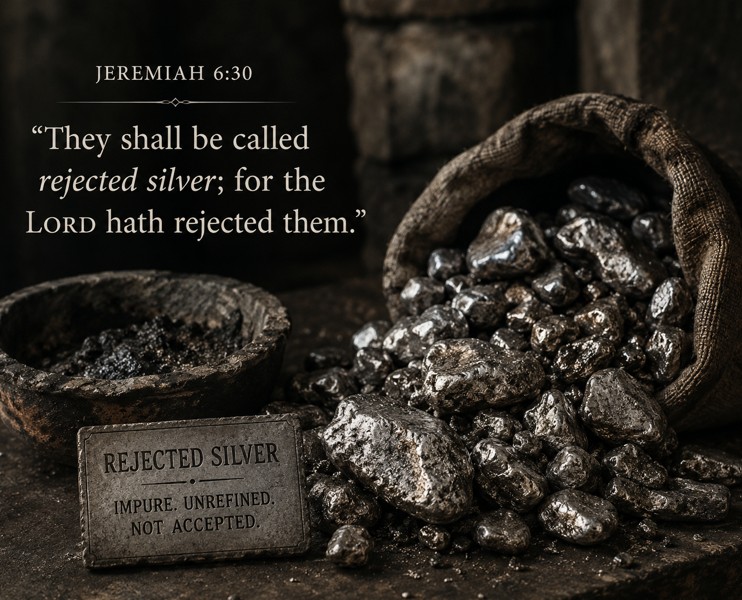
“They are called rejected silver, because the Lord has rejected them.” — Jeremiah 6:30
At first glance, Jeremiah 6:30 feels harsh. How could God compare people to rejected silver? Understanding the refining process helps bring clarity to the passage.
In ancient times, silver was purified by intense heat. A refiner would place the metal in a furnace and remove impurities as they rose to the surface. The purpose of the fire was not destruction but purification. The goal was to reveal the valuable silver underneath.
Jeremiah’s audience had experienced repeated opportunities for repentance. God sent prophets. He provided warnings. He offered correction. Yet the people continually resisted. They preferred comfort over truth and appearance over genuine transformation. By the time Jeremiah speaks, the refining process has been attempted again and again. The problem was not the refiner. The problem was the refusal to respond.
The image of “rejected silver” is not about a lack of value. Silver remains valuable. The image points to silver that cannot be successfully refined because the impurities are so thoroughly mixed into the metal. The furnace revealed what was already present.
The passage invites an important question: How do we respond when God brings conviction, correction, or difficulty into our lives? Many people spend enormous energy avoiding discomfort, defending themselves, or explaining away problems. Yet growth often begins when a person becomes willing to face reality honestly.
The good news is that Jeremiah’s message is not merely about judgment. Throughout Scripture, God consistently pursues people, calls them back, and invites them into restoration. The warning exists because God cares. Refining exists because God desires transformation.
Perhaps the lesson of Jeremiah 6 is not to fear the fire but to welcome the work of the Refiner.
-Dr. Amy Oberg
 KINGDOM LIFE AZ
Leave a comment